Now Reading: What is generative AI? A simple explanation for beginners
-
01
What is generative AI? A simple explanation for beginners

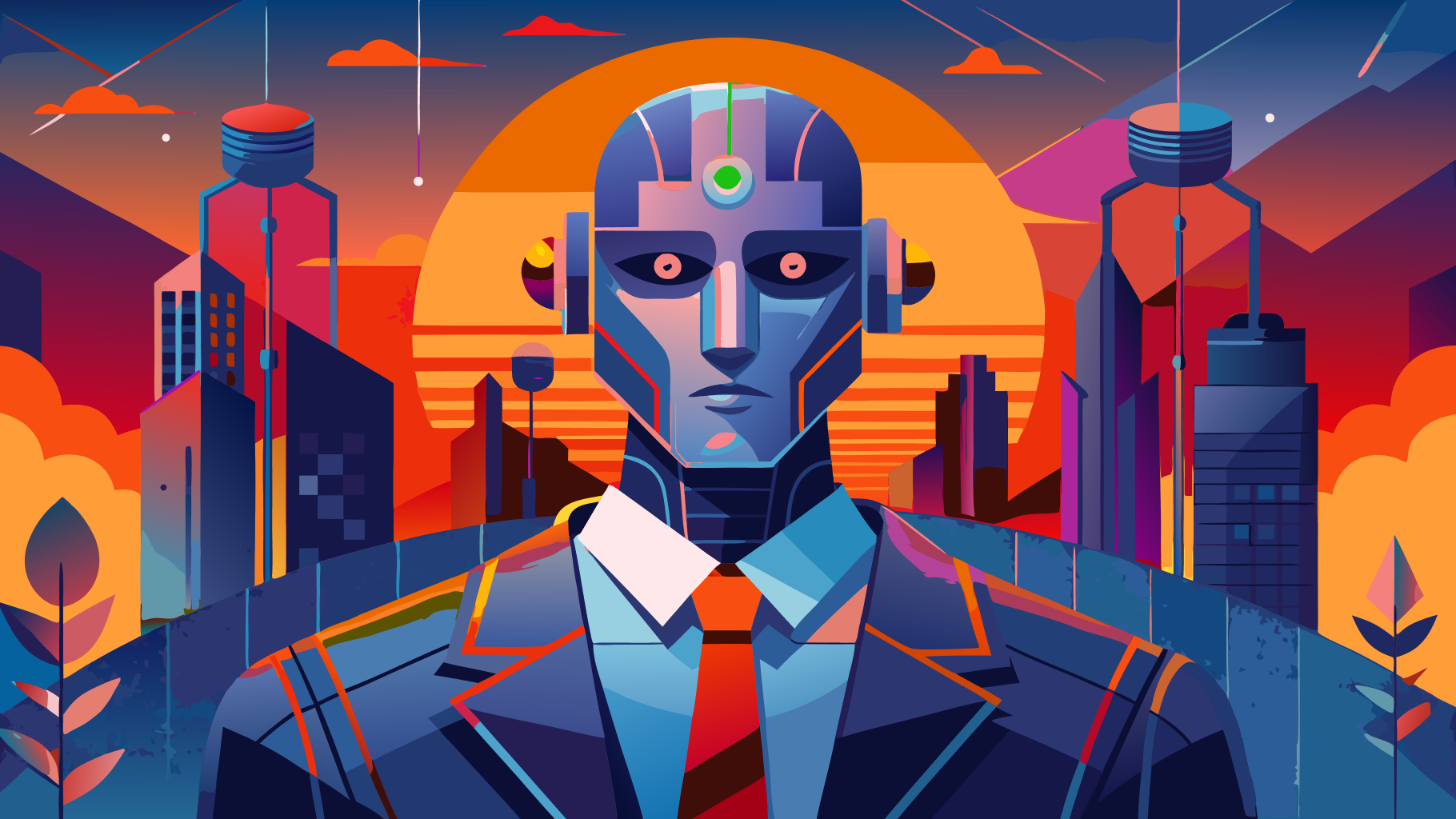
Have you ever wondered how ChatGPT can write essays, how DALL-E creates images from simple text descriptions, or how your phone can generate realistic voice responses? Welcome to the world of Generative AI, one of the most transformative technologies of our time. Whether you’re a tech enthusiast, a business professional, or simply someone curious about the future, understanding generative AI is becoming increasingly important.
In this comprehensive guide, we’ll break down what generative AI is, how it works, and why it matters all explained in simple, easy-to-understand language.
What is Generative AI?
At its core, Generative AI (GenAI) is a type of artificial intelligence designed to create new content. This content can be text, images, music, code, video, or audio. Unlike traditional AI systems that are trained to perform specific tasks like detecting spam or identifying objects in photos, generative AI is more creative and versatile.
Think of generative AI as a highly sophisticated copycat that has learned from millions of examples. After studying vast amounts of data books, articles, images, videos it can generate completely new content that resembles what it has learned, but has never existed before.
How is it different from Regular AI?
The key difference lies in what these systems are designed to do:
Traditional AI (Discriminative AI) answers questions like “Is this email spam or not?” or “Which category does this image belong to?” It classifies and categorizes existing information.
Generative AI answers questions like “Write me a poem,” “Create an image of a robot,” or “Generate code for this function.” It creates brand-new content based on patterns it has learned.
In simple terms: Traditional AI recognizes patterns; Generative AI creates new patterns.
How does generative AI actually work?
Understanding how generative AI works doesn’t require a PhD in computer science. Let’s break it down into digestible steps:
Step 1: The training phase
Imagine you want to train an AI to write stories. First, you would feed it thousands or millions of existing stories. The AI reads and analyzes these stories, learning patterns like how stories typically begin, how characters develop, how plot points are structured, and how stories usually end.
During this training phase, the AI uses something called neural networks and deep learning algorithms. These are mathematical structures loosely inspired by how our brains work. The AI adjusts its internal parameters (think of these as “learnable weights”) billions of times until it can predict the next word in a sequence with reasonable accuracy.
Step 2: Creating a mathematical map (Latent Space)
After training, the AI creates what’s called a latent space essentially a mathematical map of all the patterns it has learned. This map represents the essence of what it learned from all those examples. It’s compressed information that captures the relationships and patterns in the data.
Step 3: The generation phase
When you give the AI a prompt like “Write a story about a dragon,” it uses this mathematical map to generate new content. It doesn’t simply copy or rearrange existing stories; it creates something entirely new by:
- Understanding your prompt
- Sampling from the patterns it learned
- Generating text word-by-word, predicting the most likely next word based on probability
- Continuing until it creates a complete response
Step 4: Refinement and improvement
Modern generative AI systems refine their outputs through a process that makes them more accurate and aligned with what users want. Some systems use techniques like Reinforcement Learning from Human Feedback (RLHF), where human reviewers rate outputs, and the system learns to generate better results.
Key technologies behind Generative AI
To truly understand generative AI, it’s helpful to know about the main technologies that power it:
Large Language Models (LLMs)
Large Language Models are neural networks specifically designed to understand and generate human language. ChatGPT, Google Gemini, and Claude are all LLMs. The “large” refers to the enormous number of parameters these models contain sometimes hundreds of billions. These parameters allow the model to understand complex language nuances and context.
Transformers
The “T” in ChatGPT stands for “Transformer,” a neural network architecture that revolutionized how AI processes information. Transformers can process entire sequences of text simultaneously and understand which parts are most important, making them incredibly efficient at understanding language.
Diffusion Models
These are used primarily for generating images. A diffusion model works by starting with random noise and gradually “denoising” it into a coherent image. This process is iterative and controlled, resulting in realistic images like those created by DALL-E or Stable Diffusion.
GANs and VAEs
Generative Adversarial Networks (GANs) and Variational Autoencoders (VAEs) are other model architectures that generate content. Without getting too technical, GANs work by having two neural networks compete with each other one generates fake images while another tries to distinguish real from fake resulting in increasingly realistic generated images.
Also read: 5 Crazy AI tools that feel illegal to use (But aren’t!)
Real-world examples of Generative AI
Generative AI isn’t just a theoretical concept it’s already transforming industries. Here are practical examples you might recognize:
Text generation
- ChatGPT: Can write essays, answer questions, explain concepts, and engage in conversations
- Email assistants: Tools like Gmail’s Smart Compose suggest complete sentences as you type
- Copywriting tools: Services like Jasper or Copy.ai help marketers create ad copy and product descriptions
Image generation
- DALL-E 3 and Midjourney: Create photorealistic images from text descriptions
- Adobe Firefly: Generates images for design projects
- Photoshop’s generative fill: Automatically fills or extends parts of images
Code generation
- GitHub Copilot: Suggests code as developers type, dramatically speeding up programming
- ChatGPT and Claude: Can write and debug code in multiple programming languages
Video and audio
- OpenAI’s Sora: Generates short video clips from text prompts
- ElevenLabs: Creates realistic synthetic human voice narration
- Runway ML: Generates video effects and transitions
Healthcare applications
- Medical imaging analysis: Generates synthetic patient data for training models
- Drug discovery: Generates novel protein sequences for developing new medicines
- Virtual health assistants: Provides medical guidance and symptom assessment
How businesses are using Generative AI
The practical applications of generative AI in business are vast and growing:
Content Creation: Marketing teams use generative AI to create blog posts, social media content, and advertising copy in minutes instead of hours.
Customer Service: AI chatbots powered by generative AI handle customer inquiries with natural, human-like responses, improving customer satisfaction while reducing costs.
Software Development: Developers use AI coding assistants to write boilerplate code, debug issues, and explore solutions faster.
Financial Services: Banks use generative AI for fraud detection, personalized financial advice, and loan approval processes.
Design and Manufacturing: Engineers use generative AI to optimize product designs, create variations, and reduce material costs.
The benefits of Generative AI
Generative AI offers numerous advantages:
Increased Productivity: Automating content creation and routine tasks frees humans to focus on higher-level work.
Cost Reduction: Businesses can reduce operational costs by automating content generation, customer service, and other processes.
Accessibility: Generative AI makes sophisticated tools accessible to everyone. You don’t need to be a programmer to generate code or a designer to create images.
Innovation: By automating routine work, generative AI enables humans to focus on creative problem-solving and strategic thinking.
Personalization: Generative AI can tailor content, recommendations, and experiences to individual users.
Limitations and challenges
Despite its power, generative AI has important limitations:
Hallucinations: AI systems can confidently state false information. ChatGPT might create fake citations or inaccurate facts presented as truth.
Bias in Training Data: If the training data contains biases, the AI will likely reproduce those biases in its outputs.
Lack of True Understanding: Generative AI recognizes patterns but doesn’t truly “understand” in the way humans do. It’s sophisticated pattern matching, not consciousness.
Privacy Concerns: These systems are trained on vast amounts of data, raising questions about data privacy and consent.
Environmental Impact: Training large models requires enormous computational power, consuming significant energy.
Intellectual Property Questions: There are ongoing debates about whether AI trained on copyrighted material should compensate creators.
The future of Generative AI
The field is evolving rapidly. Here’s what we can expect:
More Specialized Models: Instead of massive general-purpose models, we’ll likely see more specialized models fine-tuned for specific industries and tasks.
Multimodal AI: AI that seamlessly handles text, images, audio, and video together, just as humans do.
Real-Time Information: Future models will have better access to current information, reducing hallucinations and outdated responses.
Energy Efficiency: Researchers are working on making these models more efficient, reducing their environmental impact.
Better Human-AI Collaboration: Tools will be designed for better cooperation between humans and AI, combining human judgment with AI capabilities.
Getting started with Generative AI
If you want to explore generative AI yourself, here are some accessible starting points:
ChatGPT (openai.com): Free and paid versions available. Great for trying text generation, coding help, and creative writing.
DALL-E (openai.com): Generate images from text descriptions.
Midjourney (midjourney.com): Another excellent image generation tool accessible through Discord.
GitHub Copilot (github.com/copilot): If you’re learning to code, this is invaluable for understanding how to write better code.
Google’s Bard/Gemini (google.com): Another conversational AI similar to ChatGPT.
Hugging Face (huggingface.co): An open-source platform with hundreds of free generative AI models for various tasks.
Practical tips for using Generative AI
If you’re new to generative AI, keep these tips in mind:
Be Specific: The more detailed your prompt, the better the output. Instead of “Write a story,” try “Write a 500-word science fiction story about a time traveler discovering their own past.”
Iterate and Refine: First outputs aren’t always perfect. Ask follow-up questions, request revisions, and gradually shape the AI’s output toward what you want.
Use It as a Tool: Generative AI works best as an assistant to enhance your work, not replace your thinking. Always review, fact-check, and edit AI-generated content.
Experiment: Try different prompts and approaches. Generative AI is a tool the more you experiment, the better you’ll get at using it.
Stay Ethical: Consider the ethical implications of how you use generative AI. Avoid using it to create misinformation, plagiarize, or cause harm.
Conclusion
Generative AI represents a fundamental shift in how we interact with technology. It’s transforming everything from how we write and code to how we diagnose diseases and design products. While it’s not magic and comes with real limitations and ethical considerations, its potential to amplify human creativity and productivity is remarkable.
Whether you’re a student, professional, entrepreneur, or curious individual, understanding generative AI is becoming as important as understanding the internet once was. The technology is here, it’s advancing rapidly, and it’s reshaping our world.
The best time to start understanding and experimenting with generative AI is now. Start with one of the tools mentioned above, play around, observe its capabilities and limitations, and think about how it could be useful in your own work or life.
Welcome to the age of Generative AI where the only limit is your imagination.