Now Reading: What is a Neural network? A powerful way machines learn
-
01
What is a Neural network? A powerful way machines learn

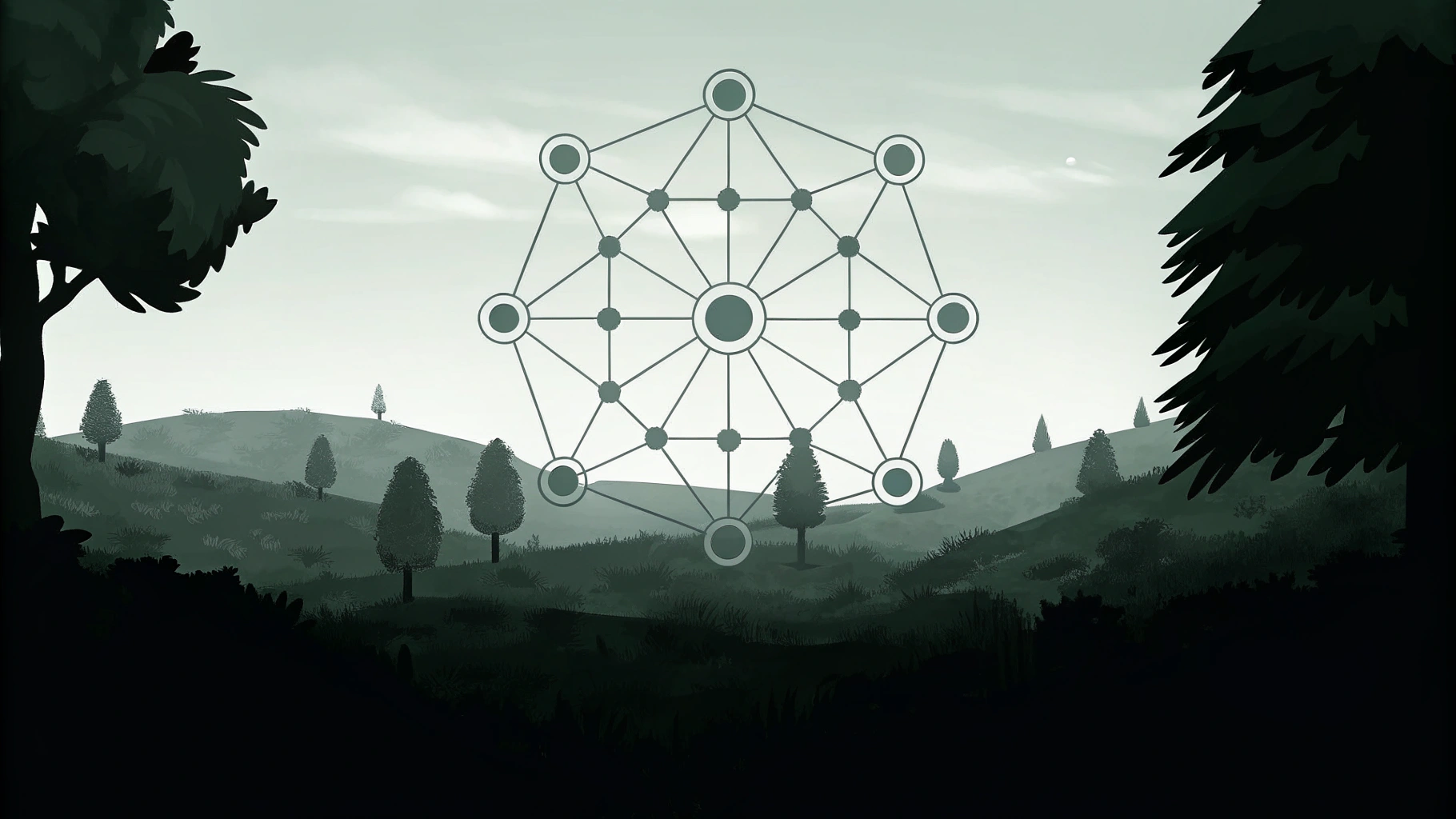
Neural networks sound complex like something straight out of a science fiction movie. But here’s the secret: neural networks aren’t as complicated as they seem. At their core, they’re simply systems inspired by how your brain works, designed to help computers recognize patterns and make decisions with minimal human guidance.
If you’ve ever wondered how Netflix recommends shows, how facial recognition unlocks your phone, or how ChatGPT understands your questions, neural networks are doing the heavy lifting behind the scenes. This post will demystify them, explaining what they are, how they actually work, and why they matter.
What exactly is a Neural Network?
A neural network is a machine learning model inspired by the biological structure of the human brain. It’s a system of interconnected artificial neurons (software nodes) organized into layers that work together to process data, learn patterns, and make predictions.
Think of it this way: Your brain has about 86 billion neurons that communicate with each other to help you recognize your friend’s face, understand a conversation, or make decisions. An artificial neural network mimics this concept using computational units instead of biological cells. While it won’t replace your brain, it’s powerful enough to solve complex problems that traditional computer programs struggle with like image recognition, language translation, or medical diagnosis.
Why the “Network” part matters
The strength of neural networks lies in their interconnectedness. Individual neurons aren’t very smart on their own each one performs simple mathematical operations. But when you connect thousands or millions of them together in a structured way, something remarkable happens: the network learns. It discovers patterns in data that even the most clever human programmer might miss.
The basic building blocks: Neurons and layers
To understand how neural networks work, you need to know about two fundamental components: neurons and layers.
Neurons: The units that do the work
An artificial neuron is a computational unit that takes in inputs, processes them, and produces an output. Here’s what happens inside:
- Receives inputs: A neuron gets multiple pieces of information as inputs.
- Multiplies by weights: Each input is multiplied by a numerical value called a weight. Weights determine how important each input is. If a weight is high, that input has a strong influence. If it’s low, the input’s influence is minimal.
- Adds bias: A constant value called a bias is added to the sum. This helps the neuron adjust its output independently of the inputs.
- Applies an activation function: The neuron passes the result through an activation function, which introduces non-linearity (complexity) into the system. This is crucial because it allows neural networks to learn and represent complex, non-linear relationships in data.
- Produces output: The final output becomes an input for neurons in the next layer.
The beauty here is simplicity each neuron is doing basic arithmetic. The magic emerges when you combine many of them.
Layers: The organization structure
Neurons are organized into three main types of layers:
Input layer
This is where your data enters the network. If you’re feeding an image, each pixel might be an input neuron. If you’re predicting house prices, inputs might be features like square footage, number of bedrooms, or location. The input layer simply passes this raw data forward without modifying it.
Hidden layers
These are the workhorses of the neural network. Hidden layers receive output from the previous layer (which could be the input layer or another hidden layer), process it through mathematical operations, extract features and patterns, and pass the results to the next layer.
A network can have one hidden layer or dozens, depending on the complexity of the task. Each hidden layer learns to detect different aspects of the pattern. For example, in image recognition:
- The first hidden layer might detect edges
- The second might combine edges to recognize shapes
- The third might recognize textures
- Deeper layers might recognize entire objects
This hierarchical feature extraction is why neural networks are so powerful each layer builds upon the previous one to understand increasingly sophisticated patterns.
Output layer
This is the final layer that produces the network’s prediction or decision. If you’re classifying images into categories (cat, dog, bird), the output layer might have three neurons, each representing the probability of one category. If you’re predicting a continuous value like temperature, the output layer might have just one neuron.
Also read: 5 Crazy AI tools that feel illegal to use (But aren’t!)
How Neural Networks learn: The training process
A newly initialized neural network is essentially worthless it makes random guesses. The real power comes from training, the process of adjusting the network’s weights and biases so it produces accurate outputs.
Forward propagation: The initial guess
Training starts with forward propagation. You feed the network a piece of data (for instance, an image), and it processes it layer by layer:
- The input layer receives the raw data
- Each hidden layer transforms the data using its current weights and biases
- The output layer produces a prediction
At first, this prediction is probably wrong. And that’s okay that’s the whole point of training.
Backpropagation: Learning from mistakes
Here’s where neural networks get clever. The network uses an algorithm called backpropagation to learn:
- Calculate the error: The network compares its prediction against the correct answer (the label) and calculates how wrong it was.
- Trace backward: The error is “propagated backward” through the network, layer by layer.
- Adjust weights: Using a technique called gradient descent, the network adjusts the weights slightly in the direction that would have produced a more correct answer. Weights that contributed to the wrong answer are reduced; weights that would have helped are increased.
- Repeat: This process happens thousands or millions of times with different examples until the network’s predictions become accurate.
The iterative refinement loop
Each time the network processes a batch of examples and adjusts its weights, it’s getting slightly better. This is why it’s called “learning” it’s improving its performance through experience, just like how you get better at a skill through practice.
textInput Data → Forward Propagation → Prediction
                                        ↓
                            Compare with Actual Answer
                                        ↓
                        Calculate Error (Loss)
                                        ↓
                        Backpropagation (Gradient Descent)
                                        ↓
                            Adjust Weights & Biases
                                        ↓
                            Repeat until Accurate
Real-world applications: Where neural networks shine
Neural networks excel at problems that are hard to program explicitly tasks where we can’t easily write if-then rules because the patterns are too complex or the data is unstructured.
Computer vision
Neural networks power facial recognition, object detection, and medical image analysis. A convolutional neural network (CNN), a specialized type of neural network designed for images, can detect tumors in X-rays or identify whether a photo contains a cat or a dog.
Natural language processing
Chat interfaces like ChatGPT use neural networks to understand human language. They can translate between languages, summarize documents, analyze sentiment in reviews, or answer questions all by recognizing patterns in text that humans taught them through training data.
Speech recognition
Voice assistants like Alexa or Siri use neural networks to convert spoken words into text, even when dealing with different accents, background noise, or speech patterns.
Recommendation systems
Netflix uses neural networks to suggest shows you might enjoy. Amazon uses them to recommend products. These systems analyze your behavior patterns and millions of others’ patterns to predict what you’ll like.
Financial predictions
Banks and investment firms use neural networks to detect fraud, predict stock movements, or assess credit risk by spotting subtle patterns in historical financial data.
Types of Neural Networks: Different architectures for different tasks
While all neural networks share the basic components we discussed, there are specialized architectures designed for specific types of problems.
Feedforward neural networks (FFNNs)
The simplest type, where data flows in one direction: input → hidden layers → output. Great for classification and regression problems.
Convolutional neural networks (CNNs)
Specifically designed for image processing. They use a technique called convolution to automatically detect features like edges, textures, and shapes making them perfect for computer vision tasks.
Recurrent neural networks (RNNs)
Designed to handle sequential data where context matters. They have loops that allow information from previous steps to influence current processing, making them ideal for language and time-series prediction.
Long short-term memory networks (LSTMs)
A specialized type of RNN that solves the problem of “remembering” information over long sequences. They use memory cells and gates to decide what to remember and what to forget.
Why this matters: The power of Neural Networks
Neural networks are fundamentally powerful for three reasons:
- Automatic Feature Learning: Unlike traditional machine learning where humans must manually specify what features to look for, neural networks discover relevant features automatically. You just give them data; they figure out what matters.
- Handling Complexity: Neural networks can model highly nonlinear relationships in data. They’re not confined to straight lines or simple curves they can learn intricate, multi-dimensional patterns.
- Scalability: They improve with more data. While traditional algorithms hit performance ceilings, neural networks often get better the more examples you feed them, especially when they have enough computational power.
This is why neural networks are the backbone of modern AI. They power everything from voice assistants to self-driving cars to medical diagnostics. If AI has made remarkable progress in the past decade, neural networks are a huge reason why.
Limitations and challenges
Of course, neural networks aren’t perfect. They come with challenges:
- Data Hungry: They typically need thousands or millions of examples to train properly, whereas simpler algorithms might work with hundreds.
- Computational Cost: Training large neural networks requires significant computing power, which can be expensive.
- Black Box Problem: It’s often hard to understand exactly why a neural network made a particular decision they’re complex systems with millions of parameters.
- Overfitting: Networks can memorize training data rather than learning general patterns, causing them to perform poorly on new, unseen data.
Getting started: The learning path
If you’re interested in understanding neural networks deeply, here’s a practical learning path:
- Understand the math: Linear algebra and calculus form the foundation. Especially understand matrix operations and derivatives.
- Learn the theory: Study how neurons, layers, and activation functions work. Understand forward propagation and backpropagation.
- Implement from scratch: Write a simple neural network in Python from scratch. This solidifies understanding far better than reading about it.
- Use frameworks: Move to TensorFlow, PyTorch, or Keras to build practical networks without reinventing the wheel.
- Practice with datasets: Kaggle and other platforms have public datasets and competitions. Build projects to apply what you’ve learned.
Neural networks are elegant systems that distill one of nature’s greatest achievements the human brain into mathematical operations that computers can perform. They’re not magic, and they’re not as complicated as their reputation suggests. They’re inspired by biology, grounded in mathematics, and powered by computation.
What makes them remarkable is their ability to learn from data without being explicitly programmed, to discover patterns that humans might miss, and to continuously improve through experience. As AI continues to advance and reshape industries, neural networks will remain at the center of that revolution.
So next time you use facial recognition, get a recommendation, or see an AI make an impressive prediction, remember: at their core, it’s just layers of artificial neurons, each performing simple math, collectively solving complex problems.