

Now Reading: The unseen cost: How the AI boom is draining the planet (and what to do)
-
01
The unseen cost: How the AI boom is draining the planet (and what to do)

The Silicon delusion and the hidden price of a click
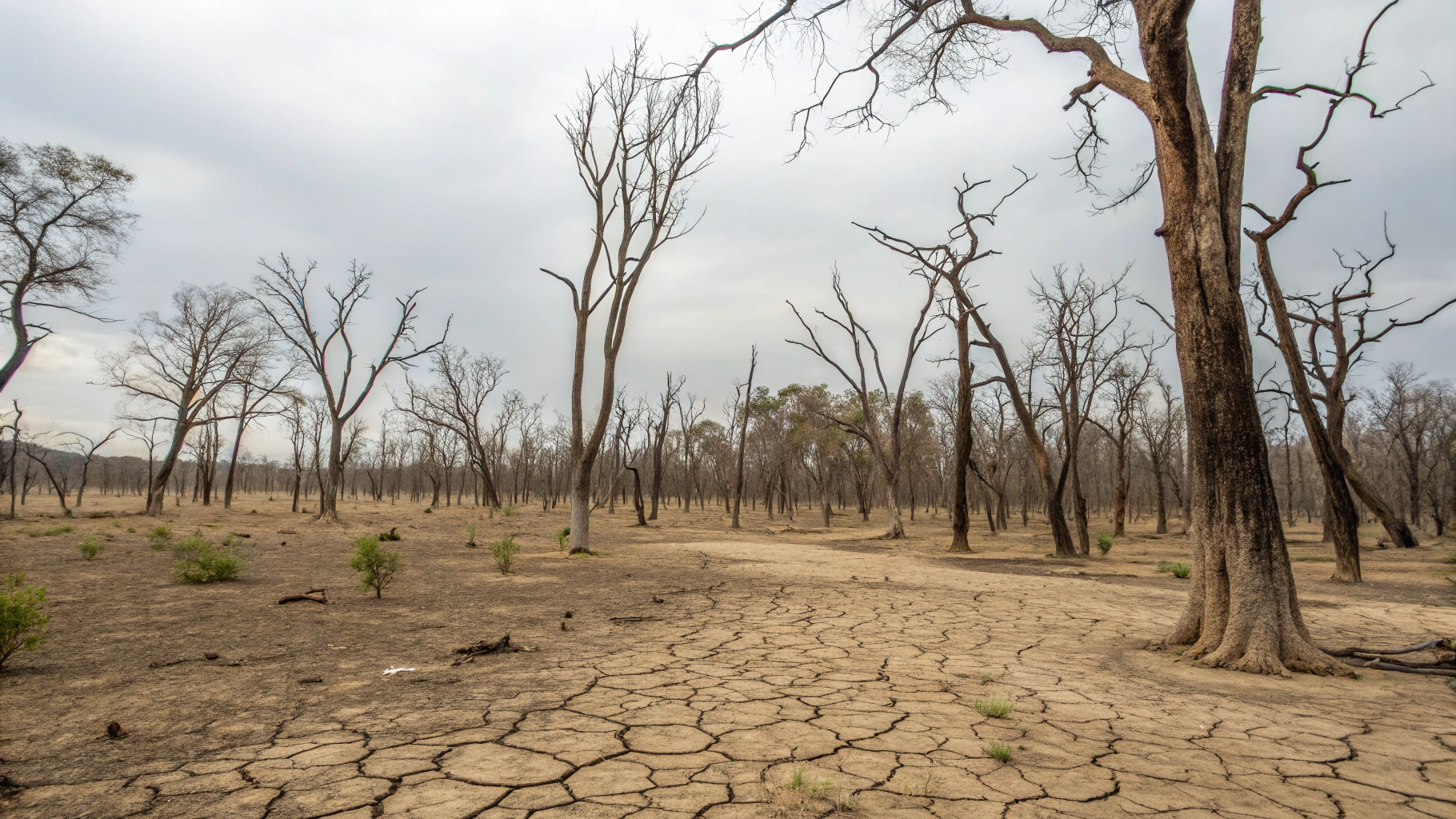
The artificial intelligence experience is meticulously engineered to feel instantaneous, limitless, and clean. It is presented as the ultimate digital product, seemingly divorced from physical consequence, operating in the ethereal realm of “the cloud.” This pervasive misconception is the Silicon Delusion , an illusion of effortless intelligence that shields the consumer and the regulator from the raw, material cost of every generated image, every line of code, and every chatbot query. It is imperative to shatter this illusion. Every single interaction with advanced AI is a physical transaction rooted in massive data centers, colossal energy grids, and finite freshwater reservoirs.
The ongoing AI boom is not merely consuming resources; it is accelerating environmental degradation through unchecked resource consumption, driven by a corporate opacity that benefits from the invisible nature of its infrastructure. The analysis shows that this crisis stems from a strategy of environmental externalization, where the devastating costs resource strain, pollution, and increased climate vulnerability are passed onto local communities and the public, while profits remain centralized and unaccountable.
To truly understand the unacknowledged debt incurred by this technological revolution, one must trace the environmental cost across three critical, interconnected domains that constitute the full lifecycle footprint of AI: first, the enormous Operational Energy and Carbon Debt required to run the models; second, the escalating crisis of Water Scarcity and Local Stress caused by the necessary cooling infrastructure; and third, the material burden of Embodied Emissions and E-Waste stemming from hardware manufacturing.
Fueling the brain: The exponential cost of computational power
The carbon marathon: Training the foundational models
The genesis of advanced AI models involves a staggering, one-time energy commitment known as the training phase. This process requires thousands of high-powered Graphics Processing Units (GPUs) that must run non-stop for weeks or even months. The data reveals a significant, quantifiable carbon debt associated with bringing these foundational Large Language Models (LLMs) to market. For instance, the training of OpenAI’s GPT-3 model consumed 1,287 MWh and released a massive 502 tonnes of carbon dioxide equivalents ($\text{CO}_2\text{e}$). Google’s Gopher model, while possessing more parameters (280 billion), still required 1,066 MWh, resulting in 352 tonnes of $\text{CO}_2\text{e}$.
This monumental initial investment represents a sunk cost that sets the environmental baseline for the entire lifecycle of the model. The research community has recognized the gravity of these figures and highlighted the urgent need for focused studies and aggressive mitigation strategies aimed at achieving carbon neutrality in LLM training.
Comparative Carbon Footprint of Large Language Model Training
| AI Model | Parameters (Billion) | Power Consumption (MWh) | Carbon Emissions (Tonnes CO2e) |
| Gopher | 280 | 1,066 | 352 |
| GPT-3 | 175 | 1,287 | 502 |
| BLOOM | 176 | 433 | 25 |
The inference trap: From training cost to operational crisis
While the training debt is massive, the cumulative, daily cost of inference the energy expended every time a user interacts with the model is rapidly becoming the primary, uncontrollable energy drain. The data center is the heart of this problem. Projections indicate that AI server usage alone is set to consume a substantial 70–80% (240–380 Terawatt-hours annually) of all U.S. data center electricity by 2028. Compounding this strain is the non-linear nightmare of generative tasks. Researchers have found that the energy demanded by increasingly sophisticated models, such as those generating video, does not scale linearly. Doubling the length of a generated video, for example, requires four times the energy, not merely twice the amount.
This non-linear scaling means that widespread daily usage, driven by user demand for richer, longer, and more complex outputs, ensures exponential, rather than linear, consumption growth. This demand translates directly into global grid strain. The International Energy Agency estimates that the worldwide electricity demand of data centers will more than double by 2030, reaching approximately 945 Terawatt-hours a total that surpasses the entire annual energy consumption of nations such as Japan. Crucially, the rapid pace of data center expansion means new energy demand must be met immediately, often overwhelming local capacity for renewable integration. This establishes the AI boom as a massive anchor, significantly slowing global decarbonization efforts by reinforcing dependence on established, carbon-intensive sources.
Financial analysts predict that nearly 60% of this rising electricity demand will be satisfied through the burning of fossil fuels, consequently elevating global carbon emissions by approximately 220 million tons. The immediate need for power means AI is currently functioning not as a catalyst for green transition, but as a critical agent maintaining the global fossil fuel infrastructure. Furthermore, accountability is hampered by a lack of standardization. Pinpointing the true, collective carbon impact is challenging due to the absence of a standardized method for measurement. Accurate operational costs must incorporate metrics like Query Energy Consumption (QEC). This missing transparency represents a critical regulatory failure that protects industry growth at the expense of environmental awareness and obstructs efforts to implement effective carbon mitigation strategies.
A drought in the digital age: The water footprint crisis
The mechanics of thirst: Cooling the beast
The extreme heat generated by high-performance GPUs requires massive volumes of water for cooling operations. This reliance on water has established AI as a major competitor for freshwater resources globally. The scale of consumption, even for earlier models, is shocking: the training of the outdated GPT-3 model alone evaporated 700,000 liters of fresh water. On a corporate scale, one major tech company’s data centers withdrew 29 billion liters of fresh water for on-site cooling in 2023.
Looking ahead, the projections are alarming. Global AI demand by 2027 is projected to account for a staggering 4.2–6.6 trillion liters of water. This astronomical figure underscores the immediate environmental threat posed by the industry’s current cooling practices. The sheer growth rate is overwhelming: annual water use associated with data center electricity consumption is expected to increase by 400%, and water use for cooling operations is expected to increase by 870%. This rapid, high-volume consumption could increase water stress in already strained basins by up to 17% annually, with even higher spikes during peak seasons.
Regional water wars: The localized toll of global tech
The abstract numbers translate directly into localized water wars. A large data center can consume up to 5 million gallons of water per day, equivalent to the daily water use of a town populated by 10,000 to 50,000 people. The concentration of infrastructure exacerbates this issue. Northern Virginia, considered the world capital for data centers with over 300 operational facilities, provides a stark case study.
Collectively, data centers in this region consumed close to 2 billion gallons of water in 2023, representing a 63% increase from 2019. Loudoun County, which hosts approximately 200 of these centers, used around 900 million gallons of water in 2023. This explosive demand has forced Loudoun Water, the local water authority, to rely heavily on potable water treated drinking water for data centers, instead of using reclaimed water.
When companies establish centers in drought-prone areas, as seen in parts of the Western United States, the exponential demand for water, coupled with existing resource scarcity, means AI is actively contributing to localized drought conditions and competing directly with residents for their fundamental right to clean water. This tendency for data center developers to strategically tap into freshwater resources places nearby communities at heightened risk, demonstrating how the prioritization of rapid deployment over sustainable resource management can overwhelm regional planning and institutionalize environmental injustice.
The materials graveyard: Hardware, Obsolescence, and Embodied emissions
The carbon of creation: Manufacturing’s massive footprint
The environmental footprint of AI begins long before the first line of code is run, rooted in the manufacturing of the high-performance computing (HPC) components, overwhelmingly GPUs. This is the overlooked cost: the carbon debt embodied within the hardware itself. The hyper-accelerated demand for AI accelerators is driving an unprecedented surge in hardware production. $\text{CO}_2\text{e}$ emissions from the manufacture of GPU-based AI accelerators are projected to increase a staggering 16-fold between 2024 and 2030, rising from $1.21$ million metric tons of $\text{CO}_2\text{e}$ to $19.2$ million metric tons of $\text{CO}_2\text{e}$. This represents a Compound Annual Growth Rate (CAGR) of $58.3\%$. This explosive growth is fueled by the inherent complexity and physical scale of advanced chips. AI accelerators require massive silicon dies to accommodate processing cores, often necessitating multiple reticles of silicon.
Their fabrication involves extremely energy-intensive processes like lithography and etching, particularly the use of Extreme Ultraviolet (EUV) lithography required for modern 5–7 nm process nodes.
Furthermore, the complexity of modern packaging and memory integration dramatically increases the environmental impact. High Bandwidth Memory (HBM) is essential for AI accelerator performance, but the increasing number of HBM stacks and dies significantly contributes to the overall semiconductor emissions. An estimation of the embodied carbon footprint of a single GPU card places the cost between 150-164 Kg $\text{CO}_2\text{e}$. Of this material impact, memory components contribute a massive 42%, followed by integrated circuits (ICs) at 25%, highlighting the direct tension between performance requirements and material sustainability.
E-waste and resource depletion: The cycle of obsolescence
The environmental crisis extends past carbon emissions into material depletion and waste management. The hyper-accelerated upgrade cycle in the AI industry means the short lifespan of GPUs and other HPC components results in a growing, immense problem of electronic waste. Manufacturing these components requires the extraction of rare earth minerals, a process that inherently depletes natural resources and contributes to environmental degradation at extraction sites.
Moreover, the concentration of nearly all advanced chip fabrication in a few locations globally primarily Taiwan and South Korea externalizes the industrial pollution burden to these specific regions. This evidence suggests that the industry’s focus on operational efficiency (running the servers) is severely undermined by the skyrocketing embodied emissions from manufacturing the hardware itself.
The 16-fold increase in manufacturing $\text{CO}_2\text{e}$ signifies that the environmental cost of building the AI apparatus is rapidly outpacing potential gains made in its operation. This demands a critical shift in regulatory focus toward mandatory total lifecycle accounting, from “mine to landfill,” to address the true rate of carbon acceleration.
The moral divide: AI, Inequality, and Environmental justice
The atrophy scenario: Automating inequality
If the current trajectory of artificial intelligence development continues unguided by principles of environmental justice, the world risks entering the “Atrophy Scenario” a future marked by unchecked technological expansion and indifferent equity that deepens societal divides and ecological degradation. This process results in a dual burden for vulnerable communities. Those who already lack digital resources, high-speed internet, or technological literacy are often the same populations disproportionately affected by environmental hazards.
They bear the localized physical cost of AI infrastructure the water scarcity, the pollution, the fossil fuel reliance while being simultaneously excluded from its technological benefits.
Algorithmic injustice and the Black Box shield
The inherent risk is that AI systems, trained on historical data reflecting existing societal biases and the underrepresentation of marginalized groups, will automate and scale these injustices in environmental decision-making. For example, if AI-driven flood prediction or resource allocation models utilize biased training data, they might consistently underestimate risk and lead to inadequate preparedness, delayed warnings, and insufficient resource allocation in low-income neighborhoods or informal settlements during climate disasters.
Furthermore, the opacity, or “black box” phenomenon, of AI’s decision-making processes makes accountability elusive when environmental harms arise. This lack of transparency shields corporations and governments from scrutiny and prevents affected communities from gaining recourse or redress. The crisis is fundamentally one of centralized power externalizing costs, which makes regulatory transparency the fundamental mechanism for equitable environmental governance.
If AI systems are allowed to prioritize economic growth over environmental protection, they consolidate power and resources while externalizing costs onto the most vulnerable.
The Exclusionary chasm: The digital divide
As environmental solutions and climate resilience tools become increasingly reliant on AI-driven platforms, the digital divide widens into an unbridgeable chasm. Communities without reliable access are marginalized from the very tools meant to foster resilience and adaptation, thereby silencing their voices in policy discussions. Moreover, the imbalance triggered by the AI technological gap can influence regional allocation of core production factors, weakening the environmental governance capabilities of AI-lagging cities due to a lack of human resources and fiscal support.
This creates a severe paradox: AI is touted as a climate solution, but its current implementation risks canceling out its intended benefits by exacerbating resource scarcity and social vulnerability.
Reclaiming Stewardship: Mandates and innovations for green AI
A systemic environmental crisis requires a dual-pronged response encompassing both stringent policy mandates and radical technical innovation.
Policy and regulatory imperatives: Mandating visibility and accountability
The fundamental mechanism for change is regulation that enforces transparency and environmental accountability. This requires adopting the founding principles of environmental law precaution, public participation, and access to justice. First, policy must mandate Compulsory Environmental Impact Assessment (EIA) for AI products and services above a certain size before public deployment. Second, there is a need for comprehensive transparency obligations for AI providers that go beyond documenting computing capacity to include the full range of environmental costs: water, materials, and embodied emissions across the entire lifecycle. This enables effective public scrutiny and accountability.
Governments must integrate AI-related policies into broader environmental regulations and encourage companies to green data centers, ensuring they are powered exclusively by renewable energy. Policy must enforce a “sustainability by design” culture, making it economically unviable to deploy resource-intensive, inefficient AI solutions by internalizing the previously externalized costs of water and carbon. Crucially, the regulatory framework must address the source of the embodied carbon crisis by incentivizing durable hardware design and circular economy processes, pushing for better recycling of rare earth metals.
The green AI toolkit: Technical solutions for efficiency
Technical innovation must synchronize with regulatory pressure to achieve sustainable scale. Developers must prioritize carbon-efficient algorithms. Techniques such as pruning, quantization, and knowledge distillation are critical for making models lighter and faster without sacrificing accuracy. Furthermore, methods like sparsity and low-rank approximation reduce the computational burden during both training and inference phases. In data center operations, sustainable design is paramount. As AI systems generate immense heat, innovative cooling technologies are essential.
Techniques like liquid immersion cooling, where hardware is submerged in non-conductive fluid, and direct-to-chip cooling dramatically reduce the energy and water required compared to traditional air-cooling systems, thereby cutting operational emissions and preserving component lifespan. Finally, enhanced data efficiency and management must be prioritized. By focusing only on necessary data, compressing it for quicker processing, and employing advanced caching mechanisms, AI systems can maintain high performance while significantly lowering overall energy consumption during processing and storage.
Dual-Path Solutions for Sustainable AI Development
| Area of focus | Policy & regulatory imperative | Technical & algorithmic innovation |
| Transparency and disclosure | Mandatory environmental impact assessments (EIAs) for water, energy, and materials | Enhanced data efficiency and management (compression, caching) |
| Operational efficiency | Requiring use of 100% renewable energy sources for data centers | Innovative cooling technologies (Liquid immersion/Direct-to-chip cooling) |
| Algorithmic development | Creating a ‘Sustainability by Design’ regulatory culture | Development of carbon-efficient algorithms (pruning, quantization, sparsity) |
A moral call to action
The time for treating the cloud as invisible is over. AI is not magic; it is machinery, and its price is measured in gigawatts, billions of gallons of fresh water, and millions of tonnes of $\text{CO}_2\text{e}$. The current cost of convenience is simply too high, threatening to accelerate climate chaos and deepen environmental injustice. We stand at a critical juncture. The analysis demonstrates a choice: continue down the path of the Atrophy Scenario, allowing unchecked expansion to consolidate power and externalize costs onto the vulnerable, or enforce a new standard of digital stewardship. This stewardship demands collective responsibility: users must become informed consumers, developers must build efficient, accountable models, and policymakers must immediately impose the regulatory floor necessary to protect the planet.
Also read: How AI will replace 10 popular jobs by 2030 (And what comes next)
The future of AI must be seen, measured, and governed by ecological constraints. Only through mandatory visibility and accountability can the technology fulfill its promise without consuming the world in the process.