Now Reading: Neural risks vs Human decision risks: Who makes better choices?
-
01
Neural risks vs Human decision risks: Who makes better choices?

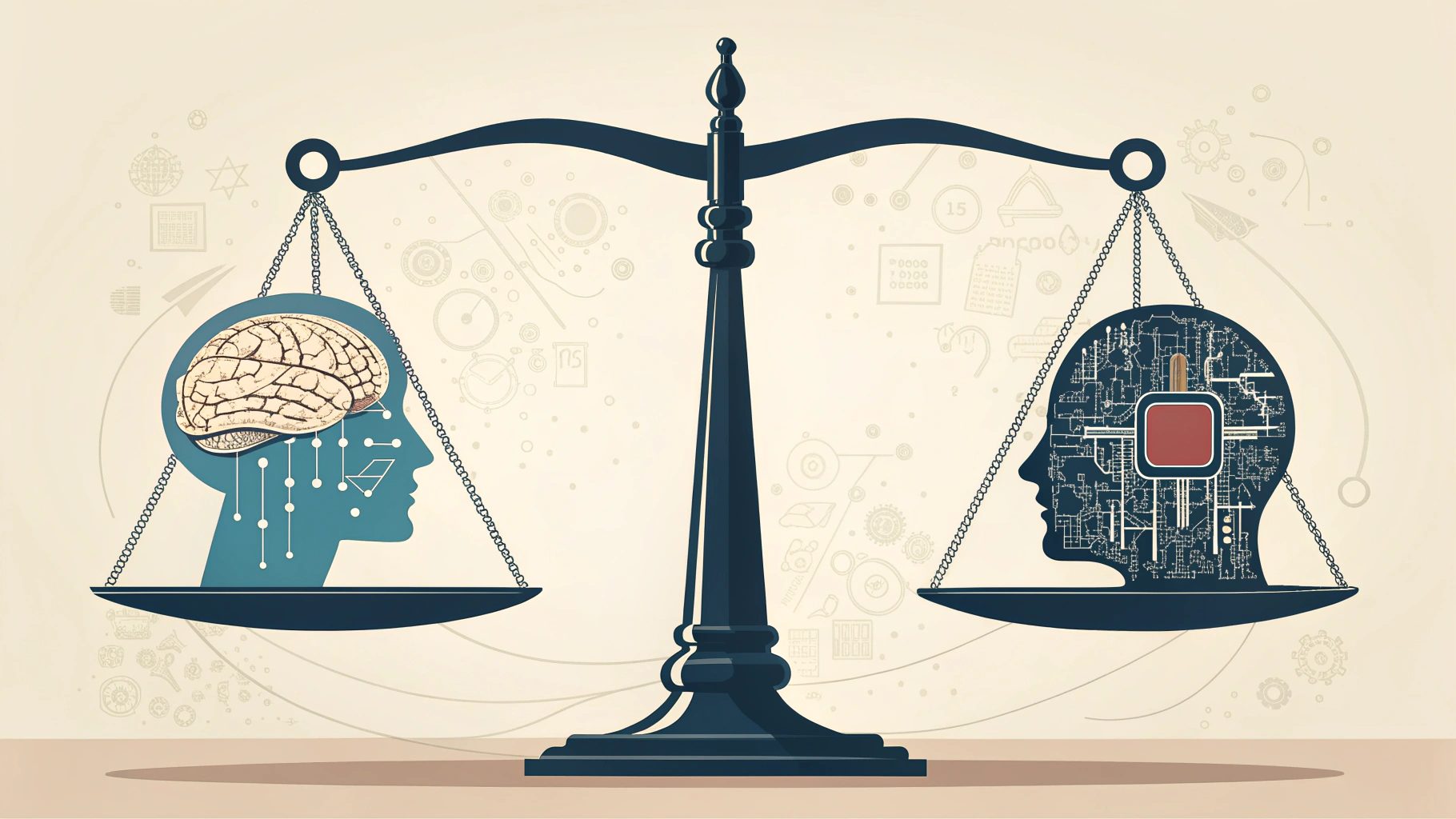
In a world shaped by neural risks, where artificial intelligence is rapidly integrating into everyday life from recommending what we should watch to guiding self-driving cars we are forced to confront a deeply important question: Are the decisions made by neural networks safer than those made by humans? Or, put differently, what kinds of risks do machines introduce, and how do they compare to the risks created by human judgment?
Understanding this balance is essential, because it shapes how we trust, regulate, and interact with intelligent systems.
The nature of human decision risks
Human decision-making is powerful precisely because it is flexible. We rely on emotion, intuition, past experience, and social cues. These traits can lead to brilliance but also to error.
1. Bias and prejudice: Humans are inherently biased. We make decisions influenced by our experiences, culture, beliefs, and sometimes subconscious prejudices. This can create unfair or inconsistent outcomes, especially in areas like hiring, policing, or loan approvals.
2. Emotional interference: Anger, stress, excitement, fear all of these emotions can cloud judgment. A pilot under stress may misread an instrument. A doctor exhausted after a 20-hour shift might overlook a symptom.
3. Limited cognitive capacity: Humans can only process a small amount of information at once. We get tired, distracted, and overwhelmed. When decisions require analyzing millions of data points, human limits become obvious.
4. Overconfidence and misjudgment: Humans often believe they know more than they actually do. This can lead to taking unnecessary risks or ignoring important signals one of the main causes of financial crashes and industrial accidents.
Human decisions are rich… but also fragile.
Neural networks the core of modern AI operate very differently. They do not get tired, emotional, or distracted. They learn patterns from vast amounts of data and make predictions based on mathematical probability.
But this comes with its own risks.
1. Data Dependency: AI is only as good as the data it learns from. If the data contains biases social, demographic, or historical the AI will inherit and even amplify them.
2. Opaqueness (The Black Box Problem): Most neural networks cannot explain why they made a particular decision. This makes it hard to debug errors, assign accountability, or identify hidden biases.
3. Lack of Common Sense: AI does not understand context or morality the way humans do. It does not “know” right from wrong. A perfectly logical decision might still be socially unacceptable or ethically harmful.
4. Vulnerability to Manipulation: AI systems can be hacked or fooled. A small alteration in input (like a modified road sign) can mislead a self-driving car. Humans are harder to trick in such precise ways.
5. Scale of Impact: Human mistakes affect individuals or small groups.
AI mistakes can affect millions instantly, because the same system operates across entire platforms or industries.
Comparing the Two: Where Each Fails
The interesting part occurs when we ask: Who is more dangerous humans or machines?
Humans fail because they are emotional, inconsistent, and limited: This creates unpredictable mistakes random errors, misjudgments, and socially biased decisions.
AI fails because it is consistent but narrow: Its errors are logical but lacking in understanding. When AI fails, it often fails spectacularly because large systems amplify the mistake.
Example:
A single human banker being biased is bad.
But an AI-powered loan system with biased training data can discriminate against thousands.
Finding the Balance: Human + Machine
The future is not about choosing humans or machines it’s about combining them.
AI is good at:
- Processing huge datasets
- Detecting patterns
- Reducing random human errors
- Making consistent predictions
Humans are good at:
- Ethics
- Context
- Creativity
- Understanding emotions
- Making judgment calls in ambiguous situations
When humans supervise AI, and AI supports human reasoning, the two systems complement each other.
This hybrid approach is already visible in:
- Medicine, where AI helps diagnose but doctors make final decisions
- Finance, where AI flags risks but human analysts approve major actions
- Transportation, where autonomous systems assist drivers rather than fully replace them
The real question: Trust and accountability
Neither humans nor neural networks are perfect.
But the biggest difference is accountability.
When a human makes a mistake, we know who to hold responsible.
When AI fails, responsibility becomes blurry:
- Is it the developer?
- The company?
- The user?
- The data?
This is why the future requires clear AI ethics, audit systems, and transparent regulations.
Human decision risks come from emotion, bias, and cognitive limits.
Neural risks come from data flaws, lack of understanding, and scalability of failure.
Neither is universally better.
But together through human-in-the-loop systems we can achieve decision-making that is not only more accurate but also more fair, ethical, and safe.
The goal is not to replace human judgment but to amplify it with the precision of AI.