Now Reading: Hyperautomation: Why you need to automate your automation efforts,business strategy
-
01
Hyperautomation: Why you need to automate your automation efforts,business strategy
Hyperautomation: Why you need to automate your automation efforts,business strategy

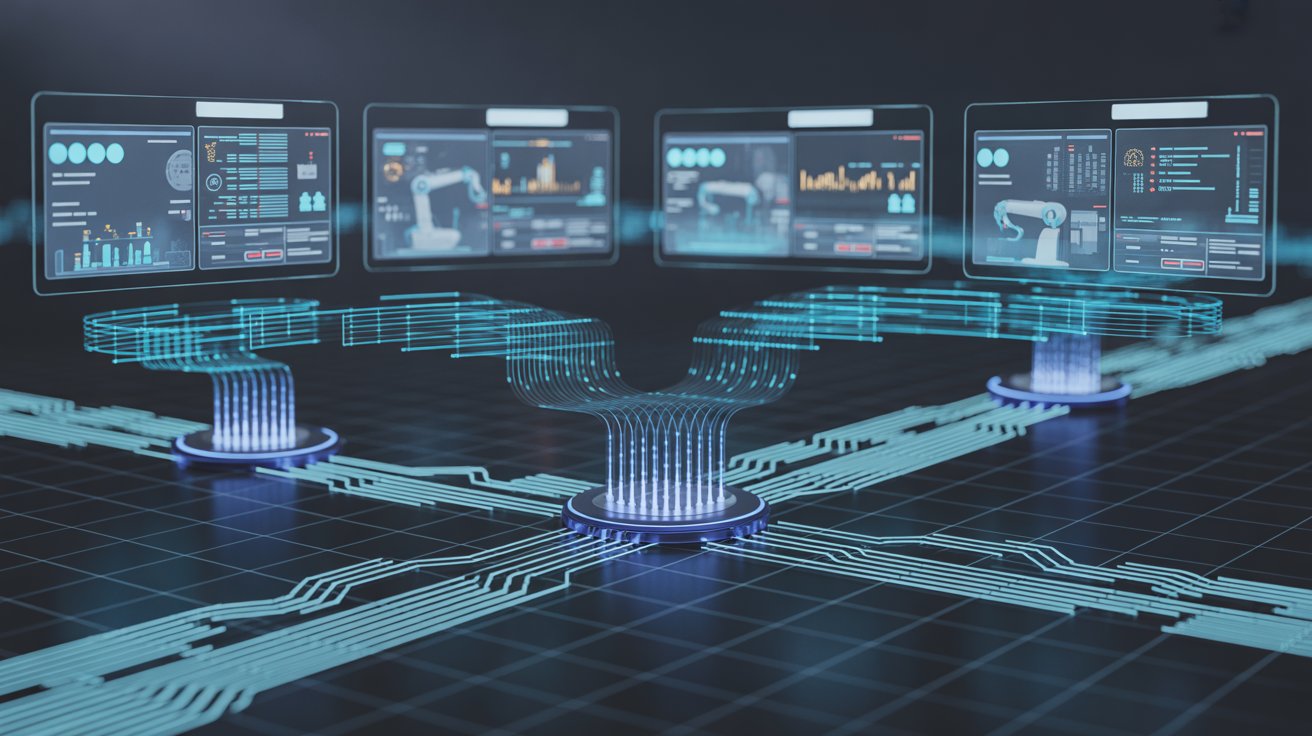
In today’s fast-paced business world, automation is no longer a luxury it’s a necessity. From streamlining repetitive tasks to optimizing complex workflows, businesses are constantly seeking ways to leverage technology to boost efficiency and productivity. But what if there was a way to automate your automation? Enter hyperautomation, a powerful concept that takes automation to the next level.
What is Hyperautomation?
Hyperautomation isn’t just a fancy buzzword; it’s a transformative business strategy that involves identifying, vetting, and automating as many business and IT processes as possible. It goes beyond traditional robotic process automation (RPA) by combining multiple advanced technologies, including:
- Artificial intelligence (AI): For tasks requiring human-like intelligence, such as decision-making and pattern recognition.
- Machine learning (ML): To enable systems to learn from data and improve their performance over time without explicit programming.
- Robotic process automation (RPA): To automate repetitive, rule-based tasks traditionally performed by humans.
- Intelligent business process management suites (iBPMS): To manage and optimize end-to-end business processes.
- Process mining: To discover, monitor, and improve real processes by extracting knowledge from event logs.
- Optical character recognition (OCR) and Intelligent document processing (IDP): To extract and process information from documents.
The goal of hyperautomation is to create a fully integrated and intelligent automation ecosystem that can adapt, learn, and continuously improve, ultimately leading to unprecedented levels of operational efficiency and business agility.
Why do you need to automate your automation efforts?
The idea of “automating your automation” might sound meta, but it addresses several critical challenges businesses face in their automation journeys:
- Complexity and scale: As organizations implement more automation solutions, managing and integrating them becomes increasingly complex. Hyperautomation provides a holistic framework to orchestrate these disparate technologies.
- Identifying automation opportunities: It can be challenging to pinpoint which processes offer the greatest return on investment for automation. Hyperautomation, through tools like process mining, helps identify these opportunities more effectively.
- Lack of visibility: Without a unified approach, businesses often lack a clear overview of their automation landscape. Hyperautomation provides greater visibility into automated processes and their performance.
- Siloed automation initiatives: Many companies start with departmental automation efforts that remain isolated. Hyperautomation breaks down these silos, fostering enterprise-wide automation.
- Adapting to change: Business environments are constantly evolving. Hyperautomation builds in intelligence and adaptability, allowing automated processes to adjust to new conditions and requirements.
The benefits of embracing Hyperautomation
By strategically implementing hyperautomation, businesses can unlock a multitude of benefits:
- Enhanced efficiency and productivity: Automating more processes, especially those that are complex and cross-functional, frees up human employees to focus on higher-value, strategic tasks.
- Reduced operational costs: By minimizing manual intervention and optimizing workflows, hyperautomation can significantly lower operational expenses.
- Improved accuracy and consistency: Automated processes are less prone to human error, leading to more accurate data and consistent outcomes.
- Faster time-to-market: Accelerating internal processes can translate into quicker development cycles and faster delivery of products and services.
- Greater business agility: Organizations can respond more quickly to market changes, customer demands, and new business opportunities.
- Better customer and employee experiences: Streamlined processes lead to faster service for customers and allow employees to engage in more fulfilling work.
- Data-driven insights: Hyperautomation generates vast amounts of data, which can be analyzed to gain deeper insights into operations and drive continuous improvement.