Now Reading: Building a knowledge graph: the semantic web’s answer to AI context, graph databases ML-Ops & engineering- A modern engineering perspective
-
01
Building a knowledge graph: the semantic web’s answer to AI context, graph databases ML-Ops & engineering- A modern engineering perspective
Building a knowledge graph: the semantic web’s answer to AI context, graph databases ML-Ops & engineering- A modern engineering perspective

Building a knowledge graph: the semantic web’s answer to AI context
Artificial Intelligence has reached an impressive level of capability. Models can generate essays, analyze medical images, write code, and even reason across multiple steps. Yet, beneath these achievements lies a persistent weakness: AI struggles with real, reliable context. Most systems still operate on fragmented data, shallow correlations, and probabilistic guesses rather than structured understanding.
This is where knowledge graphs, inspired by the original vision of the Semantic Web, become critically important. Knowledge graphs provide a way to organize information not just as data points, but as connected meaning. For ML-Ops teams and AI engineers building production-ready systems, they act as the missing layer between raw data and intelligent behavior.
This article explores how knowledge graphs work, why graph databases are essential, and how they fit naturally into modern AI engineering and deployment workflows.
The semantic web: teaching machines to understand meaning
The Semantic Web was proposed to move beyond a web of documents toward a web of knowledge. Traditional data systems store information in formats optimized for storage or retrieval, not understanding. The Semantic Web changes this by explicitly defining what data represents and how different pieces of information relate to each other.
At the heart of this vision are a few core principles:
- Data should have explicit meaning, not implied interpretation
- Relationships should be first-class citizens
- Machines should be able to reason over data, not just retrieve it
Standards like RDF, OWL, and SPARQL emerged from this idea, but their most practical and scalable outcome in today’s AI ecosystem is the knowledge graph.
What is a knowledge graph, really?
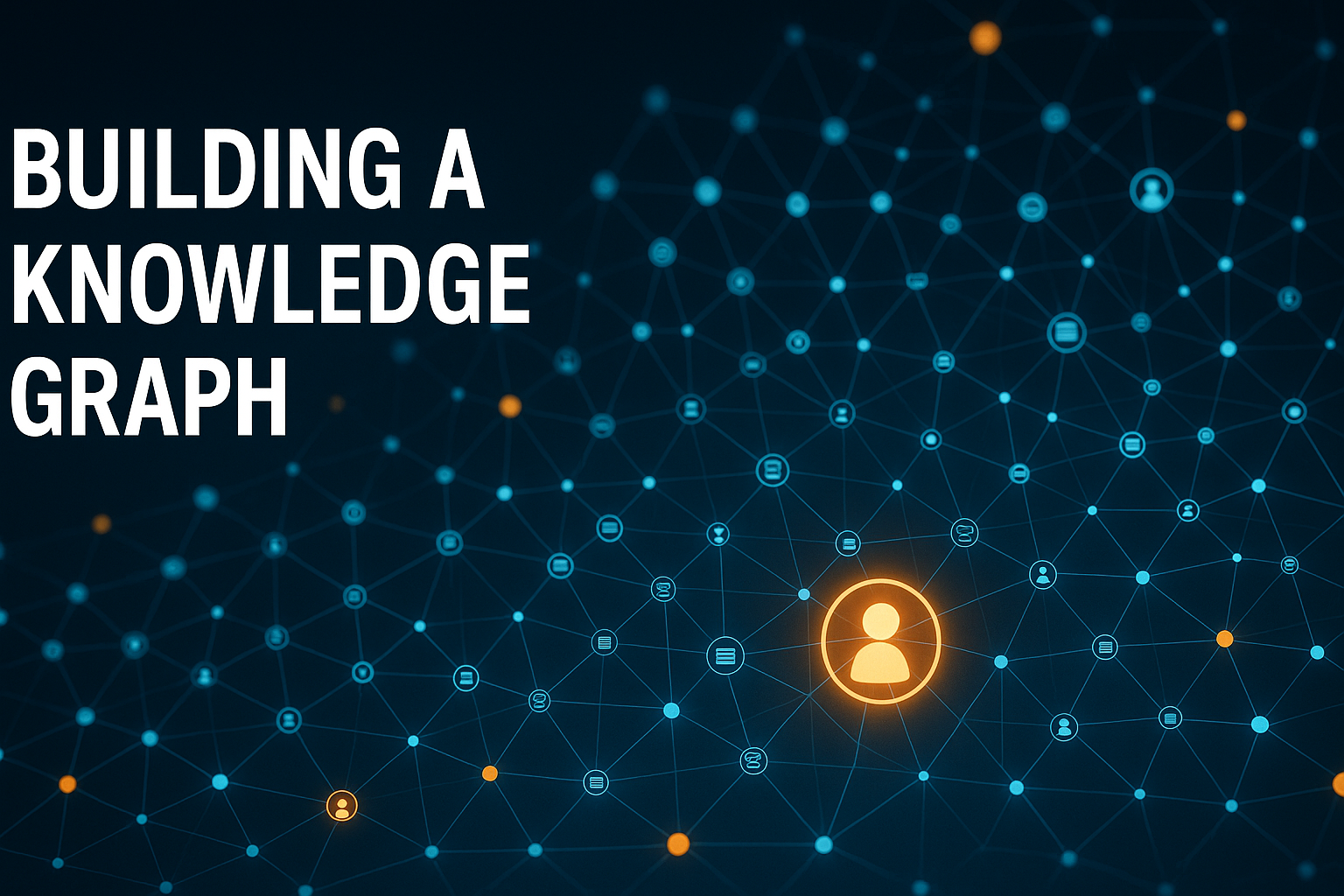
A knowledge graph is a structured representation of information where entities are connected through well-defined relationships. Instead of rows and columns, data is modeled as:
- Nodes (entities such as people, products, concepts)
- Edges (relationships between entities)
- Properties (attributes that describe entities and relationships)
For example, rather than storing a customer and their purchases in separate tables, a knowledge graph explicitly connects a Customer to a Product through a purchased relationship, complete with time, location, and context.
This structure mirrors how humans think about the world, making it far more suitable for intelligent systems.
Why context is the core problem in modern AI
Most AI models learn patterns, not understanding. They excel at recognizing correlations but fail when deeper context is required. This limitation becomes visible in production systems, where AI must operate reliably over time.
Common context-related problems include:
- Confusing similar entities with different meanings
- Losing consistency across multiple data sources
- Inability to explain decisions
- Hallucinated or logically incorrect outputs
Knowledge graphs solve this by acting as a persistent semantic memory. They provide AI systems with a structured understanding of entities and their relationships, reducing ambiguity and improving reasoning.
Graph databases: The infrastructure that makes it work
While a knowledge graph defines what you model, a graph database defines how you store, query, and scale that model. Traditional relational databases struggle with highly connected data because joins become expensive and complex. Graph databases are designed specifically for this problem.
Popular graph databases include:
- Neo4j
- Amazon Neptune
- TigerGraph
- ArangoDB
They are optimized for the following characteristics:
- Fast traversal of relationships: This allows for quick navigation through interconnected data points, enabling efficient retrieval of related information. The underlying architecture supports rapid querying, which is essential for applications such as social networks, recommendation systems, and complex data analytics.
- Flexible schemas that evolve over time: These systems accommodate changes in data structures without significant downtime or restructuring costs. As new data types and relationships emerge, the schema can adapt dynamically, ensuring continuity and scalability as organizational needs change.
- Complex queries involving many hops: The architecture is designed to handle intricate queries that require accessing multiple layers of relationships. This is crucial for applications that need to dig deep into datasets, such as fraud detection systems, network analysis, and knowledge graphs, where insight is derived from understanding complex interdependencies among data elements.
For AI systems that rely on understanding intricate data relationships, these optimizations are fundamental to delivering accurate and timely insights.ing connections, graph databases provide both performance and clarity.
Designing a knowledge graph for AI systems
Building a knowledge graph is as much about design as it is about technology. A poorly designed graph can be as limiting as a poorly designed schema in a relational database.
Key design considerations include:
- Domain modeling: Identifying core entities and concepts
- Ontology definition: Clearly specifying relationships and constraints
- Entity resolution: Ensuring the same real-world entity is not duplicated
- Extensibility: Allowing the graph to grow without breaking
Strong design ensures that the knowledge graph remains useful as new data sources, models, and use cases are added.
Knowledge graphs in ML-Ops pipelines
ML-Ops focuses on making machine learning reliable, scalable, and repeatable. Knowledge graphs fit naturally into this philosophy by serving as a shared semantic layer across the AI lifecycle.
Common integration points include:
- Data ingestion, where raw data is normalized into entities
- Feature engineering, where relationships become features
- Model training, using context-rich inputs
- Inference, grounding predictions in structured knowledge
- Monitoring, tracking how predictions relate to real-world entities
Rather than replacing existing pipelines, knowledge graphs enhance them with meaning and consistency.
Feature engineering through relationships
Feature engineering can often be the most labor-intensive aspect of machine learning. Knowledge graphs help alleviate this burden by enabling relationships to be computable by default.
Examples of graph-based features include:
- Distance or Similarity Between Entities: This refers to metric measures that quantify how closely related two nodes (entities) are within a graph. For instance, in social networks, measures like the shortest path distance can help identify how many connections are needed to link two people, while similarity measures such as cosine similarity or Jaccard index assess the overlap in their connections or attributes.
- Influence or Centrality Scores: These scores indicate the significance of a node within the graph, reflecting its ability to affect the flow of information or resources. Common centrality measures include degree centrality (counting direct connections), betweenness centrality (measuring the number of times a node acts as a bridge along the shortest path between two other nodes), and eigenvector centrality (which considers both the quantity and quality of connections).
- Community or Cluster Membership: This feature focuses on grouping nodes that are more densely connected to each other than to the rest of the graph. Clustering algorithms, such as the Louvain method or spectral clustering, can identify these communities, highlighting structural patterns and revealing insights about the relationships and dynamics within the network.
Incorporating these features can significantly enhance our models by capturing valuable domain knowledge that traditional tabular features may overlook. This leads to the development of more robust and generalizable models.
Explainable AI powered by graph reasoning
AI systems are playing an increasingly pivotal role in critical decision-making processes, which makes their explainability essential for maintaining trust and accountability. In industries characterized by strict regulations or high-stakes outcomes, black-box predictions can create skepticism and uncertainty.
Knowledge graphs significantly enhance explainability by:
- Clearly delineating and tracing relationships between various entities
- Allowing for a detailed inspection of the reasoning paths that lead to specific outcomes
- Connecting predictions to tangible, real-world entities, providing a concrete foundation for the information
Rather than simply stating, “the model predicted this,” teams can provide a more nuanced understanding of their decisions by referencing the intricate relationships and factual elements within the knowledge graph. This transparency fosters confidence in the decision-making process and helps stakeholders grasp the underlying rationale behind each prediction.
Deployment benefits for production AI systems
In production environments, artificial intelligence systems must effectively manage and adapt to change in order to maintain operational efficiency and performance. As data undergoes continuous evolution, regulatory frameworks shift, and new scenarios arise, knowledge graphs provide a critical level of flexibility that is often not available in traditional database systems.
The advantages of deploying knowledge graphs include:
- Simplified schema evolution: Knowledge graphs allow for the adaptation of data structures without the need for complex and time-consuming migrations, thus enabling businesses to respond more quickly to changing requirements.
- Centralized knowledge repository: By maintaining a centralized repository of knowledge, organizations can disseminate information seamlessly across various services, enhancing collaboration and reducing information silos.
- Enhanced consistency among models: Knowledge graphs facilitate improved consistency across different machine learning models, ensuring that all systems operate with aligned data interpretations and reducing discrepancies.
- Diminished reliance on fragile feature pipelines: By reducing dependency on traditional feature engineering, which is often prone to breaking, knowledge graphs can streamline workflows and minimize disruptions in the data processing pipeline.
For machine learning operations (ML-Ops) teams, the implementation of knowledge graphs can lead to significantly faster iteration cycles and a corresponding reduction in production failures, ultimately enhancing the overall reliability and robustness of AI-driven solutions..
Knowledge graphs and large language models
Large language models can produce fluent text but often lack a grounded understanding of the information they generate. By combining these models with knowledge graphs, their reliability increases significantly. This hybrid approach offers several benefits, including:
- Fact-grounded generation
- Fewer hallucinations
- Context-aware responses
- Reasoning specific to particular domains
Knowledge graphs serve as an external source of truth, anchoring generative models in structured reality.
Challenges in building and maintaining knowledge graphs
Knowledge graphs offer numerous advantages, but constructing them is not a straightforward task. They necessitate both initial investments and continuous governance to maintain their effectiveness.
Some of the key challenges encountered during their development include:
- Establishing precise ontologies, which define the relationships and categories within the graph
- Ensuring high standards of data quality to maintain the reliability of the information represented
- Scaling ingestion pipelines to handle increasing volumes of data efficiently
- Aligning various teams around a common understanding and shared semantics to foster collaboration
Nonetheless, it’s important to note that these challenges are fundamentally engineering problems that can be addressed with the right strategies and expertise., not fundamental limitations. With proper tooling and processes, they are manageable and worth the effort.
The future of AI engineering is semantic
As artificial intelligence systems continue to evolve and become increasingly sophisticated, the primary challenge has shifted. It is no longer merely about the scale of the model or the sheer volume of computational power at our disposal; the true challenge now lies in achieving a deep and nuanced understanding. This is where knowledge graphs play a vital role, providing the robust semantic framework that contemporary AI requires to move beyond simple pattern recognition and toward authentic reasoning capabilities.
For machine learning operations (ML Ops) and AI engineering teams, the decision to invest in knowledge graphs is far from a fleeting trend. It represents a strategic commitment to cultivating systems that are:
- More Reliable: By leveraging interconnected data, knowledge graphs enhance the consistency and dependability of AI outputs.
- More Explainable: These graphs facilitate transparency, allowing users to comprehend the rationale behind AI decisions and recommendations clearly.
- More Adaptable: Knowledge graphs enable systems to swiftly incorporate new information, ensuring that solutions remain relevant and effective in a rapidly changing environment.
- More Aligned with Human Understanding: By reflecting the complexities of human knowledge and relationships, knowledge graphs ensure that AI systems resonate more deeply with human users.
In essence, knowledge graphs signify the culmination of the Semantic Web vision, bridging the gap between data and intelligent insight while fostering a more intuitive interaction between humans and machines.Web’s promise, quietly enabling the next generation of intelligent systems behind the scenes.