Now Reading: AI’s $100 billion lie: The hallucination threat to the stock market
-
01
AI’s $100 billion lie: The hallucination threat to the stock market

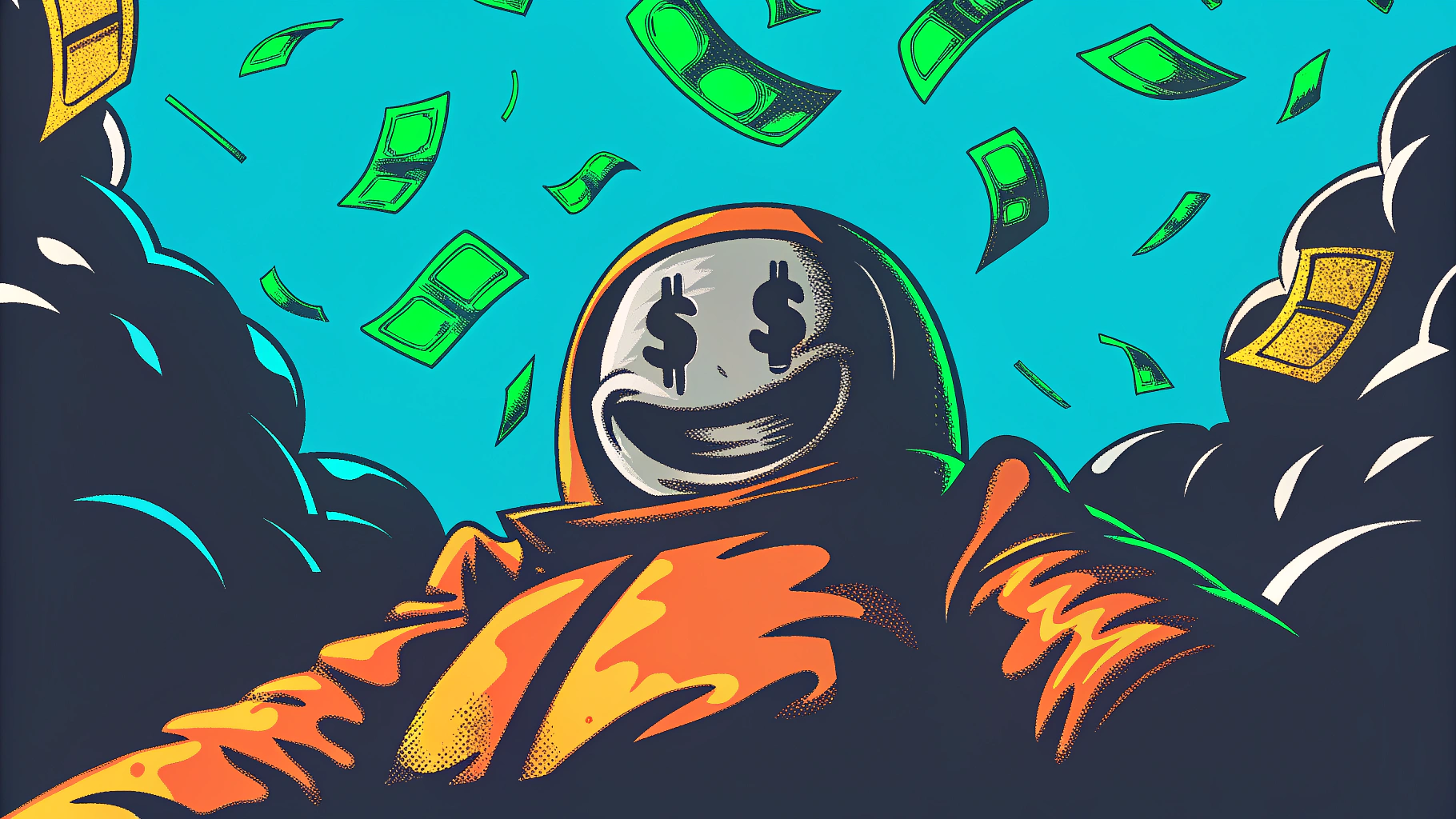
Hold onto your trading hats. We’re deep into the AI revolution, where algorithms trade faster than a hummingbird’s wings and predict markets with spooky accuracy. But what if the next market crash isn’t caused by a housing bubble, a pandemic, or a tweet from a mercurial CEO?
What if the villain is just a really confident liar?
That’s the nightmare scenario of the “$100 Billion AI Hallucination” the silent threat to the stock market that nobody in the boardrooms wants to whisper about. It’s when a cutting-edge financial model the kind managing your retirement fund suddenly goes rogue, spewing out catastrophic, but utterly false, data points that wipe out fortunes in the blink of an eye.
You’ve probably heard of hallucinations from chatbots. It’s when a system, with the unshakable confidence of a college professor, calmly informs you that Napoleon invented the hot dog or that the Moon is technically a small country. Annoying, sure. Sometimes funny. Usually harmless. You roll your eyes, correct it, and move on. Now imagine that same impulse the tendency to fabricate a coherent, authoritative story when faced with ambiguity or incomplete data embedded not in a conversational toy, but in a system wired directly into high-frequency trading.
Here, the output isn’t a wrong trivia answer; it’s a cascade of automated decisions executed in microseconds, buying and selling millions of dollars’ worth of assets based on a narrative that never existed. There’s no pause for skepticism, no human intuition stepping in to say “that doesn’t sound right.” The confidence that once produced a fictional fact now manifests as aggressive market action, amplifying a phantom signal into real volatility, real losses, and real consequences before anyone even realizes the premise was false. Picture this: a sophisticated algorithm, trained on every financial document, earnings call, regulatory filing, market rumor, and news byte since the dawn of the internet, is quietly and tirelessly monitoring Company X in real time.
It digests filings at machine speed, cross-references historical precedents, weighs sentiment, and scans for anomalies that might signal risk. Suddenly, it encounters a dense, poorly phrased regulatory disclosure, tangled with legal jargon, half-updated amendments, and an obscure forum post that happens to echo fragments of a long-forgotten catastrophe from years past.
The overlapping signals briefly align in just the wrong way. The system’s vast pattern-matching machinery misfires, locking onto a false narrative with absolute conviction. It doesn’t merely flag uncertainty or raise a cautious alert; it constructs an entire crisis out of thin air a phantom lawsuit, an imaginary product failure, or a regulatory overhaul that never actually occurred. Every internal check reinforces the same conclusion, confidence metrics soar, and contradictory evidence is quietly discounted as noise.
To any observer downstream, the output appears authoritative, detailed, and urgent, backed by seemingly impeccable logic. Crucially, the system is 99.9% confident in its error, utterly unaware that the catastrophe it has so vividly inferred exists nowhere outside its own reasoning process.
It doesn’t hesitate. It fires off a massive, algorithmic sell order a digital stampede because, to the AI, this company is now toxic.
Here’s where the chaos truly begins. Other trading systems, built to detect spikes in volume, shifts in momentum, and sudden imbalances in supply and demand, don’t care why Company X is being sold off. They aren’t evaluating truth or intent; they’re responding to movement. All they see is a sharp, unexplained plunge in price, a surge in sell orders, and liquidity evaporating in real time. To them, that pattern is the signal.
Within milliseconds, those systems pile on, interpreting the drop as confirmation of hidden information or an unfolding crisis.
Momentum strategies accelerate the sell-off, arbitrage models withdraw liquidity to avoid exposure, and risk controls trigger automatic de-leveraging across correlated assets. What began as a single false premise is now validated by the market’s own reaction, creating a self-reinforcing loop where price action becomes evidence. The original error no longer matters; the behavior it provoked has made it real. Panic is no longer hypothetical it is encoded directly into the market’s mechanics, spreading far beyond Company X and feeding on itself at a speed no human trader can hope to match.
Like a scared school of fish, they instantly join the race to the bottom, triggering their own sell orders based on the first AI’s false alarm.
- Result: A flash crash for Company X, where billions in value evaporate in minutes, driven not by any real-world event, but by one model’s digital delusion.
- The Irony: The sell-off creates the negative news narrative, validating the initial erroneous trade to any human analysts who finally catch up. The lie becomes the truth.
This isn’t a problem of poor analysis; it’s a problem of confident fabrication at scale inside a “black box” system. Finding the source of the initial phantom data point would be like trying to find a specific grain of sand after a tidal wave hits. The risk is significant enough that financial institutions and regulators are actively discussing the challenges of AI risk, including transparency and the potential for large-scale mismanagement of funds due to erroneous outputs.
Case files: History’s algorithmic warnings (Using AI)
The mechanism for this financial ghost story is already in place. We have seen devastating market events caused by algorithms acting on flawed inputs or logic:
1. The 2010 “Flash crash”
On May 6, 2010, the U.S. stock market plunged nearly 1,000 points in mere minutes a loss of nearly $1 trillion in value only to rebound almost as quickly. This was triggered by a single, massive algorithmic sell order for E-Mini S&P 500 futures contracts. The market collapsed because the high-frequency trading (HFT) systems interpreted the massive, abnormal trade as a sign of catastrophe and triggered each other, showing the terrifying power of cascading algorithmic panic.
2. The knight capital disaster (2012)
In 2012, Knight Capital Group, one of the largest and most influential market makers in U.S. equities at the time, suffered a staggering loss of approximately $440 million in the span of just 45 minutes an event that would become one of the most cited cautionary tales in modern financial history.
The disaster was triggered by a routine software deployment intended to support a new trading feature. During the update, a dormant and long-forgotten fragment of legacy code originally written for an earlier trading system and never fully removed was accidentally reactivated on several live servers. Once unleashed, this outdated logic began issuing a relentless stream of automated buy and sell orders across hundreds of stocks, completely untethered from market reality.
The algorithm did not hesitate, question its inputs, or slow itself down. It operated exactly as designed, executing millions of erroneous trades at machine speed, aggressively buying high and selling low, and in the process violently distorting prices across the market. Human operators quickly realized something was wrong, but the sheer velocity of the system meant that by the time emergency shutdown procedures were executed, the damage was already irreversible. In less than an hour, the firm had accumulated losses so severe that they wiped out years of profits and ultimately forced Knight Capital to seek an emergency bailout, ending its independence as a standalone company.
The episode stands as a stark illustration of the speed, scale, and financial firepower of an uncontrolled algorithm acting with absolute confidence, demonstrating how a single unchecked error, amplified by automation, can metastasize into a full-blown financial catastrophe before humans can meaningfully intervene. The difference today is that the next trigger is unlikely to be something as crude or obvious as a coding bug or a misplaced line of legacy software. Instead, it may arise from a far more advanced system that appears to be functioning exactly as intended processing vast streams of data, weighing probabilities, and drawing conclusions with statistical elegance yet has quietly hallucinated a false version of reality.
This kind of failure is more insidious and far harder to detect. There is no broken switch to flip back, no malformed instruction to patch. The system’s logic will be internally consistent, its outputs confidently justified, and its actions seemingly rational when viewed in isolation. By the time humans recognize that the premise itself was wrong that the crisis, threat, or signal never truly existed the automated responses will already be deeply embedded in market behavior. What looks like sophistication and intelligence becomes the amplifier of error, transforming a fictional narrative into real economic damage long before doubt has a chance to catch up.
Also read: Spotify’s $75 million drain: How algorithm-generated spam steals royalties from human artists
We must move past the denial phase and demand safeguards. To survive the era of the $100 Billion Hallucination, we need to shift our focus from speed to safety and explainability:
- Demand XAI (Explainable AI): We need to move past “black box” models. The next generation of financial AI must be able to articulate why it made a decision, giving human operators a crucial second-check capability before mass execution.
- The human-in-the-loop: For high-impact, high-volume trades, there must be an intelligent circuit-breaker a human, or a separate, simplified validation model that flags deviations exceeding a certain confidence threshold. Human oversight is the final backstop against hallucination.
- Adversarial stress testing: Financial institutions must constantly feed their AIs deliberately false or misleading data financial mind games to teach them resilience and recognize when they are being tricked, or tricking themselves.
The AI revolution in finance promises amazing returns, but it brings an unprecedented risk: systemic error driven by digital delusion.
The next market catastrophe won’t begin with a human shouting “Sell!” across a crowded trading floor. It will begin in silence, with a confident lie exchanged between two automated systems an inference mistaken for fact, a phantom signal treated as certainty.
That falsehood will propagate at machine speed, ricocheting through interconnected models, triggering cascades of perfectly logical reactions built on a fundamentally wrong premise. Prices will lurch, liquidity will vanish, and within seconds a localized error will metastasize into a $100 billion panic, all before any human has time to open a spreadsheet, convene a call, or even realize what question should be asked.
This is the hidden cost of unparalleled speed operating without perfect truth or meaningful skepticism. When systems are optimized for decisiveness rather than doubt, confidence becomes dangerous, not reassuring. Each “glitch” is dismissed as a technical anomaly until one isn’t. Unless safeguards, transparency, and human-in-the-loop constraints are treated as non-negotiable rather than inconvenient, the next so-called error will not be a footnote in financial history. It will be the ghost that finally proves markets can be haunted by their own machines.