Now Reading: From Neuron to network: The Neuroscience behind Deep learning
-
01
From Neuron to network: The Neuroscience behind Deep learning

In recent years, deep learning has revolutionized the fields of artificial intelligence (AI) and machine learning, powering applications from image recognition to natural language processing. But beneath the remarkable performance of deep learning models lies an inspiration drawn from one of the most complex systems known the human brain. Understanding the neuroscience behind deep learning not only enriches our appreciation for these technologies but also opens pathways to innovating smarter, more efficient algorithms.
This blog post explores the fascinating journey from the biology of neurons to the development of artificial neural networks, diving into computational neuroscience and how it informs modern deep learning.
The Biological foundation: Neurons and Neural networks
The human brain consists of approximately 86 billion neurons, each connected to thousands of other neurons via synapses. These connections form intricate networks that process and transmit information, enabling perception, cognition, memory, and action.
Neurons: The basic units of the brain
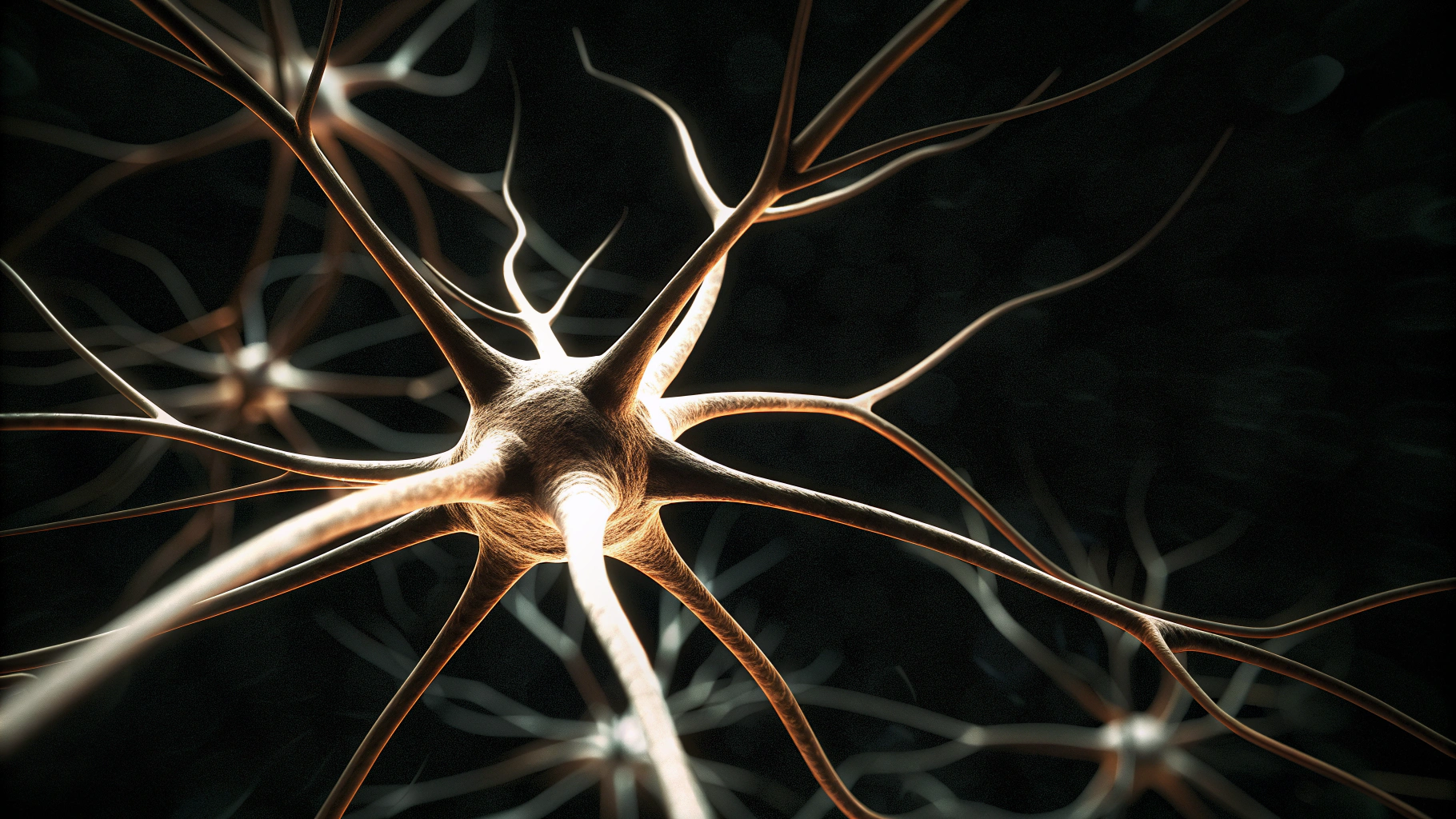
At a cellular level, a neuron has three main parts: the dendrites, the soma (cell body), and the axon. Dendrites receive signals from other neurons, the soma processes these signals, and the axon transmits the output to other neurons.
Information transmission occurs through electrical impulses called action potentials. When a neuron receives enough excitatory input to cross a certain threshold, it “fires,” sending an action potential down its axon to communicate with connected neurons via synapses. These synapses can strengthen or weaken over time a property called synaptic plasticity, which underlies learning and memory.
Neural networks in the brain
Neurons do not work in isolation but form networks. These networks are organized hierarchically and functionally, with layers of neurons processing information at increasing levels of abstraction. For example, visual information flows from simple edge detection in early visual areas to complex object recognition in higher brain regions.
This hierarchical and distributed processing inspired the design of artificial neural networks.
Artificial neural networks: Mimicking the brain’s architecture
Artificial neural networks (ANNs) are computational models inspired by the brain’s networks. They consist of layers of interconnected units called artificial neurons or nodes. Each connection has an associated weight that modulates signal strength, analogous to synaptic strength in biology.
Structure of artificial Neurons
An artificial neuron receives multiple inputs, each multiplied by a weight, sums them, adds a bias term, and passes the result through an activation function. This process mimics the biological neuron’s integration of inputs and firing behavior.
Common activation functions include:
- Sigmoid: Outputs values between 0 and 1, mimicking a probabilistic firing.
- ReLU (Rectified Linear Unit): Outputs zero if input is negative and the input itself if positive, enabling faster and more effective training.
Layers and network depth
Artificial networks are organized in layers:
- Input layer: Receives raw data.
- Hidden layers: Perform transformations and feature extraction.
- Output layer: Produces the final prediction or classification.
Deep learning refers to ANNs with many hidden layers, enabling the model to learn complex, hierarchical representations.
Learning algorithms: How networks adapt
Just as the brain learns by adjusting synaptic strengths, artificial networks learn by updating connection weights based on data.
Backpropagation and Gradient Descent
The most common learning algorithm is backpropagation combined with gradient descent. The network makes a prediction, compares it to the true output (loss), and propagates the error backward through the network to update weights and reduce future errors.
This iterative process is analogous to the brain’s synaptic plasticity, where connections strengthen or weaken based on experience.
Computational Neuroscience: Bridging Biology and AI
Computational neuroscience is the interdisciplinary field that uses mathematical and computational models to understand brain function. It provides insights that guide and inspire AI development.
Modeling Neuronal Dynamics
Unlike simplistic artificial neurons, biological neurons exhibit complex dynamics, including temporal patterns, adaptation, and stochasticity. Computational models such as the Hodgkin-Huxley model capture these dynamics, enabling a deeper understanding of neural computation.
Spiking Neural Networks (SNNs)
While traditional ANNs use continuous activation functions, biological neurons communicate using discrete spikes. Spiking neural networks aim to model this more faithfully, promising more biologically plausible and energy-efficient AI systems.
Learning Rules Beyond Backpropagation
Biological learning involves mechanisms like spike-timing-dependent plasticity (STDP), where the timing of spikes influences synaptic changes. Researchers are exploring such rules to develop more brain-like learning algorithms.
Neuroscience insights driving Deep learning advances
Neuroscience continues to influence deep learning in several ways:
- Hierarchical Processing: Inspired by the visual cortex, convolutional neural networks (CNNs) use layers of filters to detect edges, textures, and objects.
- Attention Mechanisms: Modeled after human attention, these mechanisms allow networks to focus on relevant parts of the input, improving tasks like language translation.
- Recurrent Networks: Mimicking temporal processing in the brain, recurrent neural networks (RNNs) handle sequential data by maintaining a memory of previous inputs.
- Neuroplasticity: Concepts of plasticity inspire continual learning models that adapt without forgetting previous knowledge.
Challenges and future directions
Despite progress, significant challenges remain in merging neuroscience and deep learning:
- Interpretability: Understanding how deep networks make decisions remains difficult, unlike the more interpretable neurological processes.
- Energy Efficiency: The brain operates at remarkably low power compared to AI hardware; bridging this gap is a key research area.
- Generalization: The brain excels at generalizing from few examples, whereas deep learning often requires massive labeled datasets.
Future research aims to build more brain-like AI systems that are efficient, adaptable, and interpretable, leveraging ongoing discoveries in neuroscience.
Conclusion
The journey from neuron to network highlights the profound influence of neuroscience on deep learning. By emulating the brain’s architecture and learning principles, AI has achieved remarkable feats. At the same time, computational neuroscience provides a rich source of inspiration and rigor, pushing the boundaries of what artificial systems can achieve.
As we continue to unravel the mysteries of the brain, the synergy between neuroscience and AI promises to unlock new horizons, creating intelligent systems that learn, adapt, and reason with ever-greater sophistication.